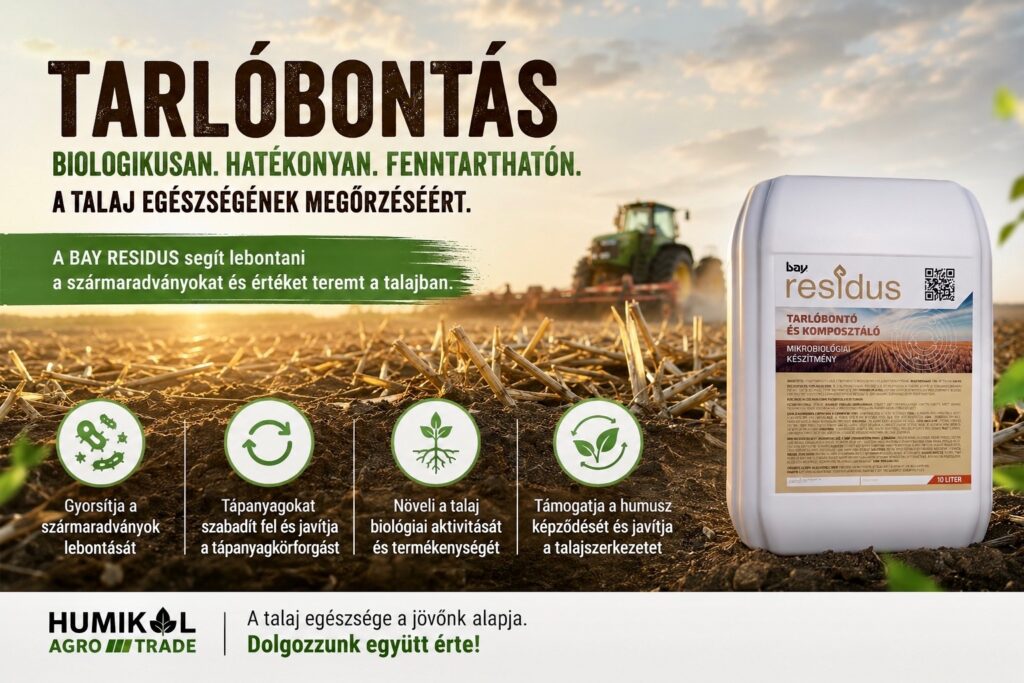
The purpose of stubble decomposition extends far beyond removing plant residues from the soil surface. Proper residue management encourages the natural breakdown of organic material, supports soil biological activity, improves nutrient recycling, and helps create favorable conditions for the establishment of the next crop.
As microorganisms gradually decompose crop residues, nutrients become available again within the soil system while organic matter contributes to maintaining healthy soil structure and biological balance.
When incorporated into an integrated crop management program, effective stubble decomposition can provide several agronomic advantages:
Although residue management is beneficial after virtually every harvested crop, it becomes particularly important when large volumes of biomass remain in the field.
Stubble decomposition is especially valuable following:
These crops produce considerable amounts of cellulose, hemicellulose, and lignin-rich residues, which naturally require active microbial communities for efficient decomposition.
When crop residues remain undecomposed for extended periods, they may create several practical challenges during field operations. Excessive residue can interfere with tillage, reduce seedbed quality, complicate planting, and negatively affect crop establishment.
Slow decomposition may contribute to:
The efficiency of residue decomposition depends on several environmental and agronomic factors. Soil microorganisms perform best when moisture, temperature, aeration, and pH are within suitable ranges.
Additional factors that contribute to successful residue management include:
Creating favorable conditions for beneficial microorganisms is essential for maximizing biological activity and supporting natural decomposition processes.
Bay Residus is a microbiological product designed to support the decomposition of stubble and crop residues as part of modern soil management programs. It helps promote microbial activity involved in breaking down plant-derived organic materials, contributing to improved organic matter recycling and healthier soil biology.
Bay Residus can be effectively integrated into residue management programs following:
By supporting naturally occurring microorganisms involved in decomposing cellulose, hemicellulose, lignin, and other complex plant compounds, Bay Residus contributes to the long-term improvement of soil biological processes.
Modern farming increasingly focuses on preserving soil health while making better use of naturally available organic resources. Returning crop residues to the soil through efficient biological decomposition is an important component of regenerative and sustainable agricultural systems.
Well-managed residue decomposition helps maintain active soil biology, supports nutrient cycling, and contributes to the long-term productivity of agricultural soils.
To achieve the best possible results, microbiological products should be applied under favorable field conditions.
Recommended practices include:
Successful stubble decomposition depends on combining appropriate agronomic practices with favorable environmental conditions. Proper residue preparation, adequate soil moisture, and active microbial populations all contribute to improved decomposition efficiency.
Stubble decomposition is an essential component of modern crop production and soil management. More than simply removing crop residues, it supports nutrient recycling, encourages healthy soil biology, and helps prepare the field for the next growing season.
Integrated into a comprehensive residue management program, Bay Residus provides microbiological support for the natural decomposition process, contributing to improved soil health, more efficient organic matter recycling, and sustainable agricultural production.