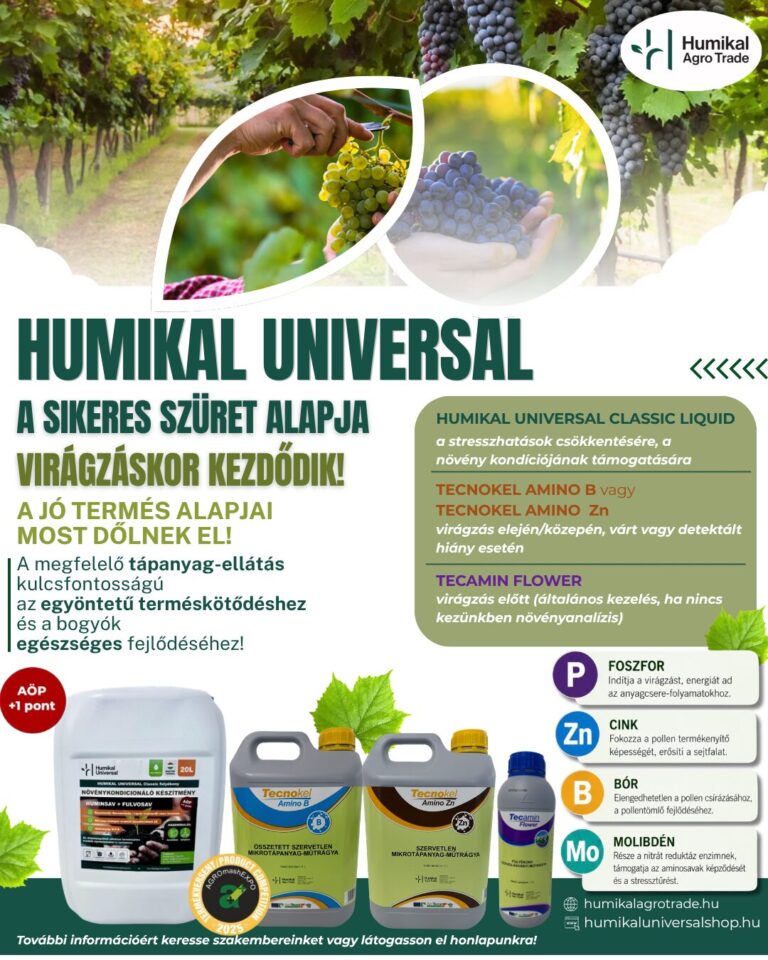
Phosphorus is one of the most important nutrients for plants, participating in virtually all metabolic processes. It plays a crucial role in flower initiation and reproductive development, making it indispensable for successful fruit set.
Phosphorus:
Adequate phosphorus nutrition promotes healthy flower development and improves fertilization efficiency.
Boron is one of the most critical micronutrients during grapevine flowering. Insufficient boron availability can reduce flower formation, impair flower quality, and negatively affect stamen development.
Boron supports:
Boron deficiency may result in poor cluster formation, uneven berry set, and loose bunches that are more susceptible to fungal diseases and pest damage.
Zinc is involved in numerous enzymatic reactions and plays an important role in the synthesis of plant growth hormones.
Adequate zinc nutrition contributes to:
Maintaining sufficient zinc levels helps ensure a more uniform flowering and fruit-setting process.
Although grapevines require only small quantities of molybdenum, its presence is vital for several physiological processes.
Molybdenum is a key component of the nitrate reductase enzyme, which is responsible for converting nitrate into forms that can be used for amino acid synthesis. This process is fundamental for the production of amino acids, including glutamic acid, which plays an important role in plant stress tolerance.
Adequate molybdenum supply:
Foliar application is one of the fastest and most efficient ways to supply phosphorus, boron, zinc, and molybdenum during critical growth stages. Nutrients applied through the leaves are rapidly absorbed and utilized, providing timely support when demand is highest.
The Humikal Agro Trade product range offers several solutions to support flowering and fruit set in grapevines:
Important: Tecamin and Tecnokel products should not be mixed in the same spray solution and must be applied separately.