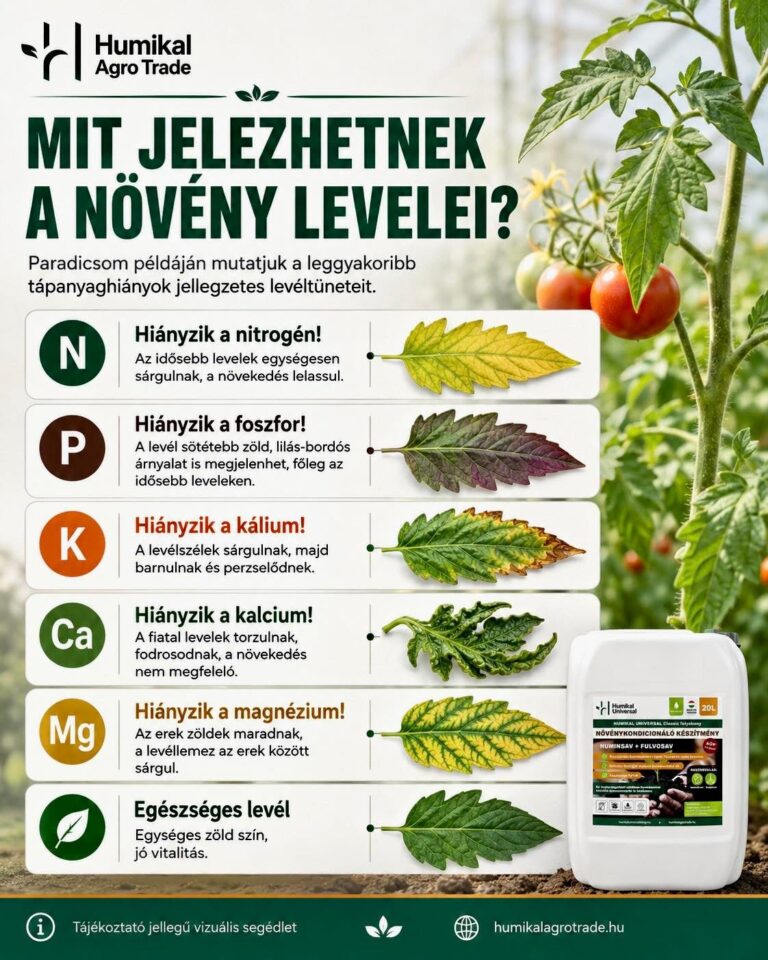
During growth, plants continuously utilize macro- and micronutrients. If a nutrient:
the plant may begin to show deficiency symptoms.
It is important to emphasize that leaf symptoms alone do not always provide a definitive diagnosis, but they serve as a highly useful early warning system.
Nitrogen is one of the most important nutrients for vegetative plant growth. In case of deficiency:
Since nitrogen is a mobile nutrient, the plant reallocates it from older leaves to younger tissues. As a result, symptoms first appear on the lower leaves.
Phosphorus plays a key role in:
Typical deficiency symptoms include:
Temporary phosphorus deficiency may also occur in cold soil conditions or during reduced root activity.
Potassium is essential for:
Deficiency symptoms may include:
Potassium deficiency can also increase sensitivity to drought and heat stress.
Calcium is a less mobile nutrient, therefore deficiency symptoms primarily appear on younger plant parts.
Typical symptoms include:
Calcium deficiency is often not caused solely by low calcium levels, but also by water balance issues or insufficient transpiration.
Magnesium is the central element of chlorophyll, playing a direct role in photosynthesis.
In case of deficiency:
This so-called interveinal chlorosis is a well-recognized symptom in many crops.
Nutrient deficiency does not always mean the nutrient is absent from the soil. In many cases, the underlying causes include:
For this reason, modern crop production increasingly focuses on technologies that:
Humic acid and fulvic acid-based products may support plants in several ways:
The humic and fulvic acid-based plant conditioner Humikal Universal Classic Liquid can serve as a technological solution designed to support biological and nutrient cycling processes between soil and plant systems.
Leaves often provide early signals when plants are experiencing stress or nutrient imbalance. Early recognition and proper agronomic response can play a significant role in:
In addition to visual symptom observation, it is always recommended to carry out:
Modern crop production today is no longer only about the quantity of nutrients applied, but also about how efficiently plants are able to utilize them.